Why a GMT Watch?
A GMT watch tracks two time zones simultaneously — your local time on the standard 12-hour dial, and a second zone displayed on a 24-hour hand pointing to a bezel ring. Originally developed for Pan Am pilots in 1954, the GMT has become the go-to complication for anyone who crosses time zones regularly or works with international teams.
The watches below span every tier from the Timex Waterbury at under $150 to the Patek Philippe Annual Calendar GMT at contact-dealer territory. Whether you want a practical daily tool or the watch that started it all, there's a GMT here for you.
12 GMT Watches Worth Owning
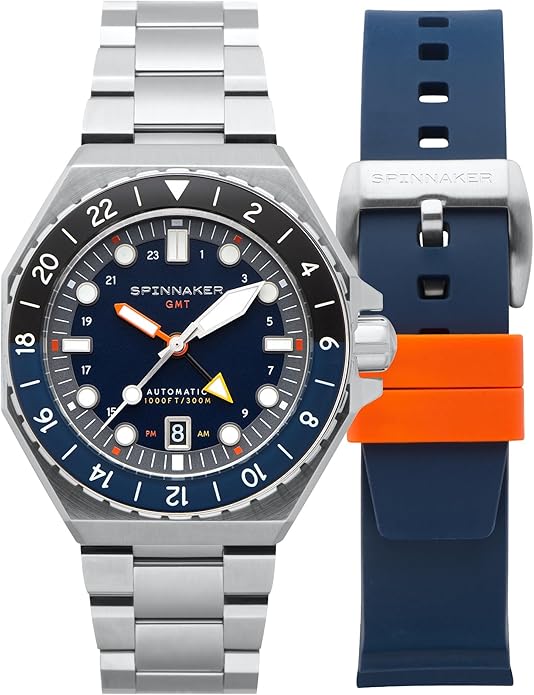
A legitimate automatic GMT powered by the Seiko NH34 movement at an honest price. Diver-style 44mm case, 300m water resistance, and a rotating bezel for tracking a third time zone. Best-value GMT entry point on this entire list.

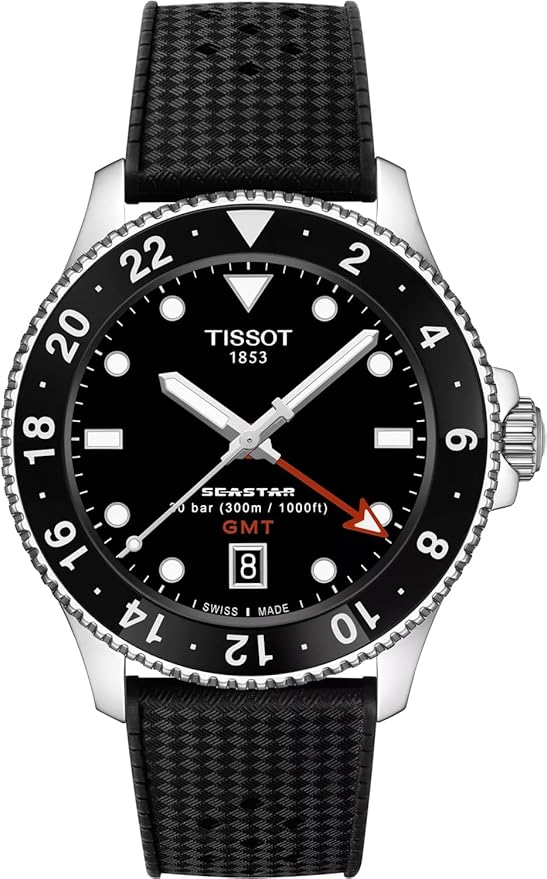
Seiko's first true GMT in the accessible 5 Sports lineup. Black and gray rotating bezel, 100m water resistance, and the reliable automatic movement Seiko is famous for. The sweet spot for a first automatic GMT.

A dive-spec GMT with sapphire crystal at a price that defies expectation. 200m water resistance, automatic movement, rotating GMT bezel, and build quality that rivals watches costing twice as much. Ratio consistently punches above its weight.

The most accessible GMT on this list. Quartz accuracy, vintage styling, and a proper 24-hour second timezone hand. Perfect for trying the GMT complication for the first time without committing to four figures.
The world's first solar touch-screen watch also tracks 31 time zones. Tap the sapphire crystal to switch between altitude, compass, weather forecast, and GMT functions. Swiss made, battery-free, and genuinely unlike anything else.

Swiss independent watchmaking at a price that surprises. Blue gradient dial, 41mm case, automatic GMT with a 24-city ring. The dressiest GMT on this list — equally at home in a boardroom or an airport lounge.
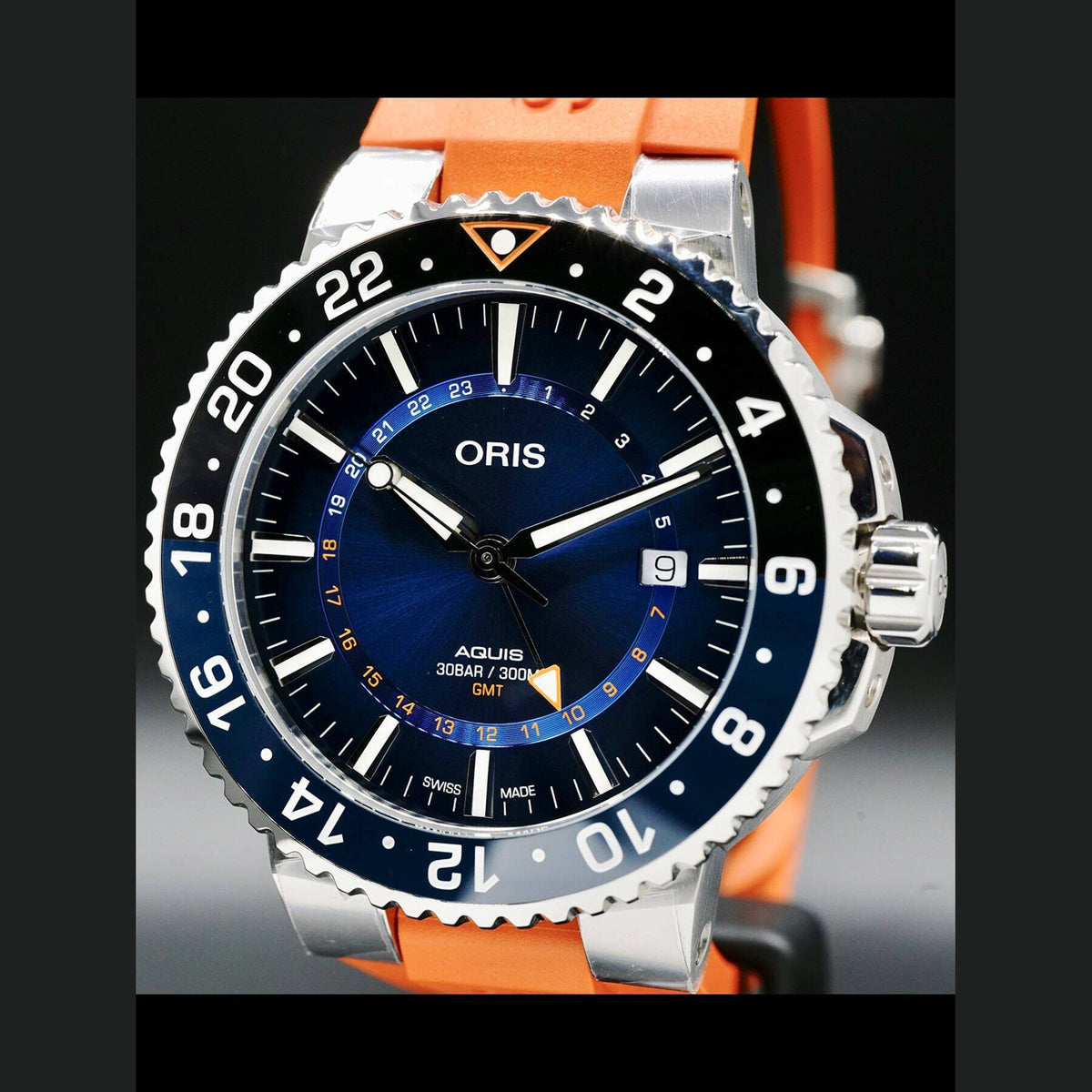
A limited-edition dive GMT that doubles as a conservation statement — Oris donates proceeds to coral reef restoration. Pepsi ceramic bezel insert, 300m water resistance, and one of the most striking dial colorways in the GMT category.

Japan's counter-argument to Swiss supremacy. The Hi-Beat 36000 beats at 10 times per second for exceptional accuracy. Triple time zone display, hand-finished Zaratsu-polished case. Grand Seiko at its finest.
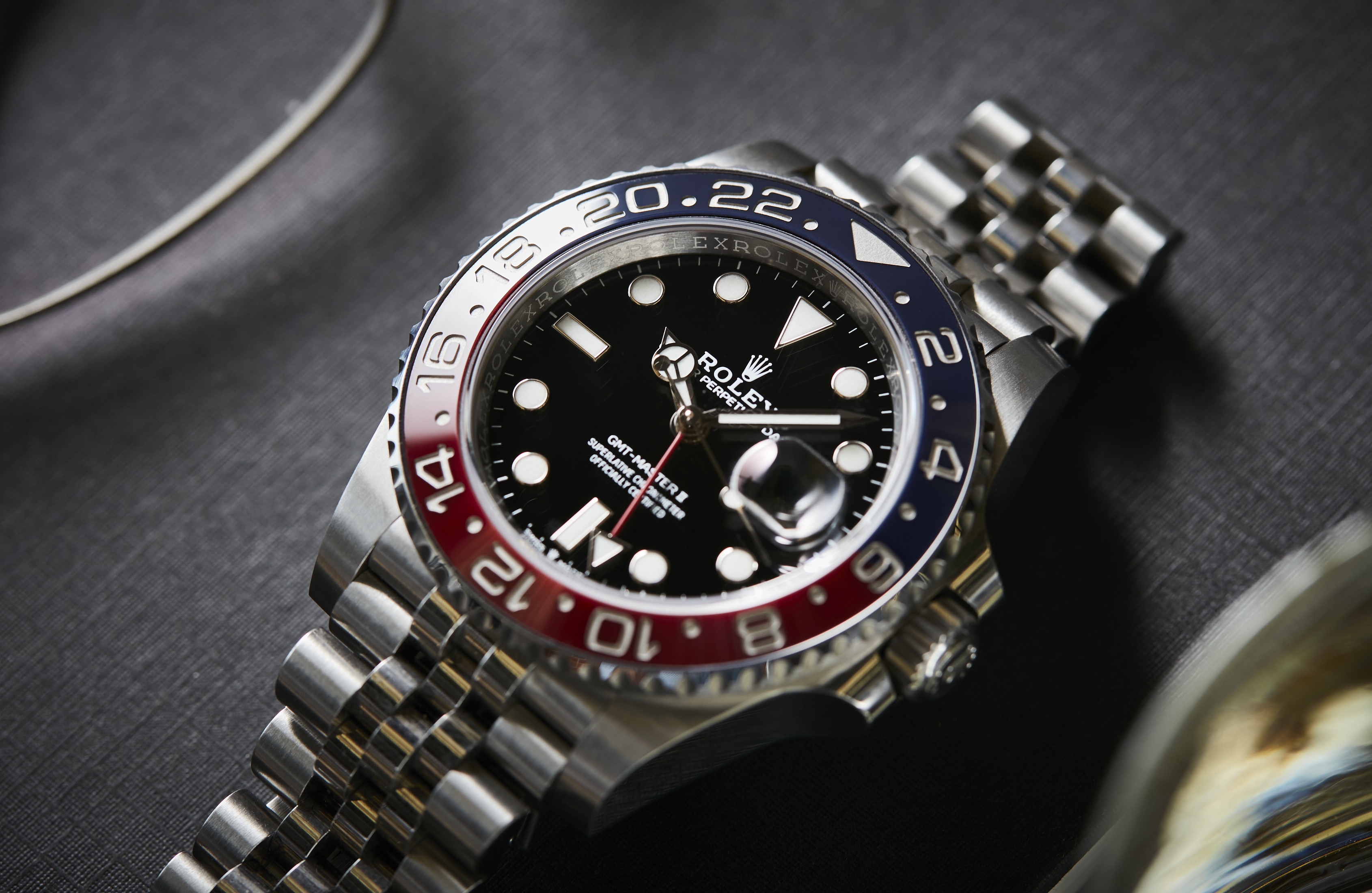
The watch that defined the category in 1954. Cal. 3285 with 70-hour power reserve, Cerachrom ceramic Pepsi bezel, and the most recognisable silhouette in watchmaking. Multi-year waiting list new — secondary market at serious premium.

Omega's serious diver gets a GMT hand. Co-Axial Master Chronometer certified at 15,000 gauss magnetic resistance — no other watch at this price tier matches that spec. 600m water resistance. The GMT for people who take their watches seriously.

A complete annual calendar — day, date, month — combined with dual time zone in 18k white gold. The Calibre 26-330 requires one correction per year, on March 1st. Everything a traveler needs, finished to a standard no other brand achieves.

German watchmaking at its absolute peak. The Lange 1 Time Zone adds a second timezone display and day/night indicator to the iconic asymmetric Lange 1 dial. German silver three-quarter plate, hand-engraved balance cock. The grail of dual-time dress watches.
What Is a GMT Watch?
GMT stands for Greenwich Mean Time — the baseline from which all time zones are measured. A GMT watch adds a 24-hour hand that completes one rotation per day, pointing to a fixed bezel ring. Set it to UTC or a home time zone, read local time on the 12-hour dial, and you instantly know the time in two places at once.
There are two types: a true GMT (caller GMT) lets you adjust the local hour hand independently without stopping the movement — essential when crossing time zones. A standard GMT moves both hands together; you adjust via the bezel. Both work, but the caller GMT is more practical for frequent travelers.
The GMT complication was invented for Pan Am pilots in 1954, who needed to track New York time while flying to London. Rolex developed the first GMT-Master for the airline — and the rest is horological history.
GMT Buying Guide
Under $500: Quartz is Smart
The Timex Waterbury and Ratio FreeDiver are the standouts — genuine dual-time function, no compromise. For automatic under $500, the Spinnaker Dumas and Seiko SSK001 are the best-value options available.
True GMT vs. Standard GMT
For frequent travelers, hold out for a caller GMT — adjusting the local hour hand without stopping the movement is a real practical advantage. The Seiko 6R64 and Tudor MT5652 both offer this at accessible prices.
Bezel Color: Form Meets Function
Pepsi (red/blue) splits day and night visually on the 24-hour ring. Batman (black/blue) is more understated. All-black is the most versatile. All work equally well mechanically — choose based on how you'll wear it.
Case Size & Wearability
Most GMTs run 40–44mm due to the extra dial information. The 40mm Rolex and 41mm Raymond Weil wear more elegantly under a shirt cuff. A 44mm dive-style GMT like the Spinnaker suits a bolder, sportier look.