
Why a Moon Phase Watch?
A moon phase complication tracks the lunar cycle — typically a rotating disc beneath the dial showing the moon waxing and waning through its 29.5-day cycle. One of watchmaking's oldest complications, it predates chronographs and GMT functions by centuries. Today it straddles the line between astronomy tool and pure aesthetic indulgence.
Practically speaking, moon phase watches are useful for tidal monitoring, farming calendars, and sleep tracking. But most people who wear one are drawn by something simpler: a window to the night sky on your wrist. Few complications are more immediately beautiful — and at every price from $115 to contact dealer, there's one worth owning.
12 Moon Phase Watches Worth Owning
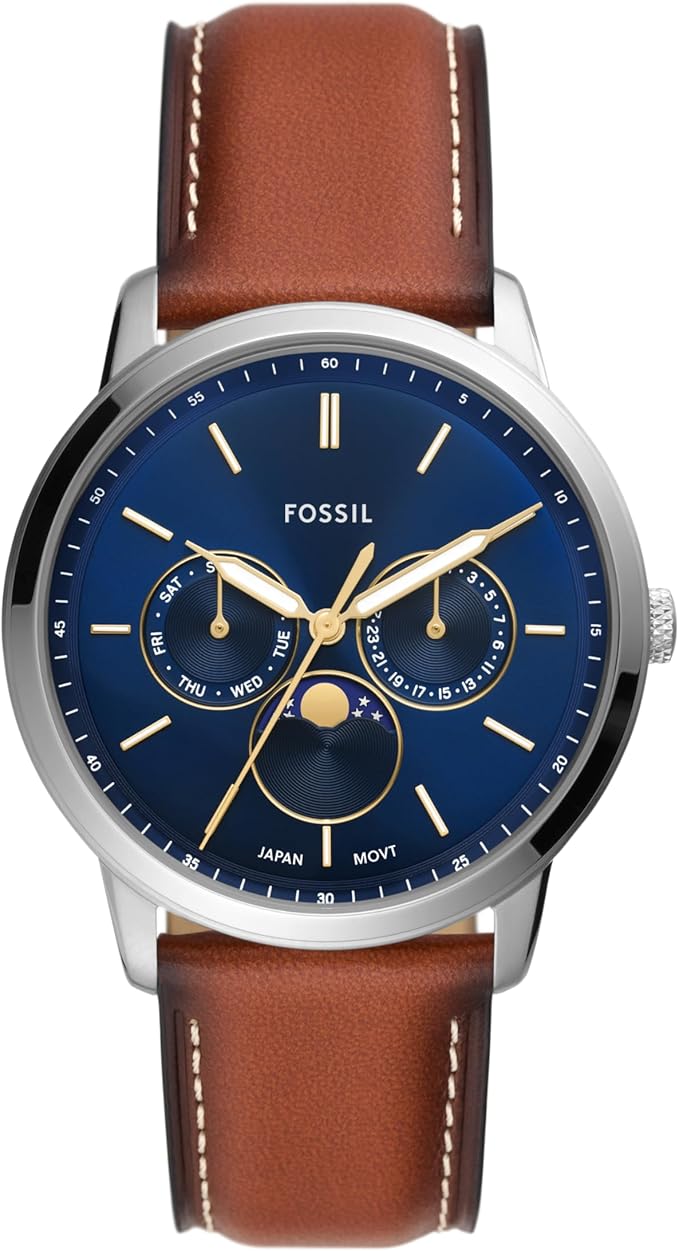
The best entry point into moon phase watches on the market. Mid-century inspired design, blue sunray dial, genuine leather strap, and a proper sun/moon disc aperture. Fossil's Neutra is the one most people point to when someone asks "where do I start?"
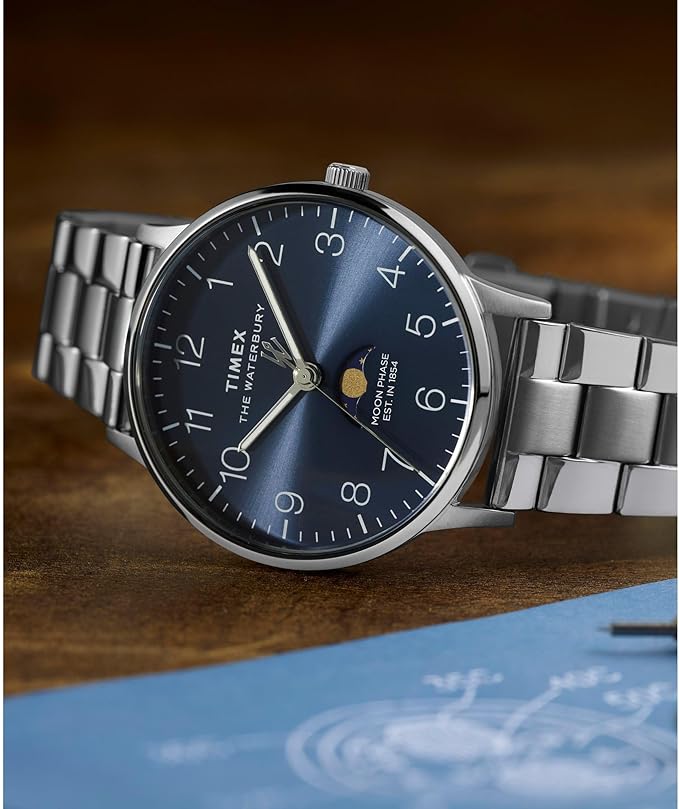
Timex brings the moon phase complication down to the most accessible price on this list. Heritage-inspired styling, a warm brass-toned case, and a proper lunar disc aperture. An honest, no-frills moon phase for the curious first-timer.

Eco-Drive technology means it never needs a battery — powered by any light source. The Calendrier shows month, day, date, and moon phase. Two-tone gold and silver bracelet with cobalt blue dial. One of the best functional moon phase values on Amazon.
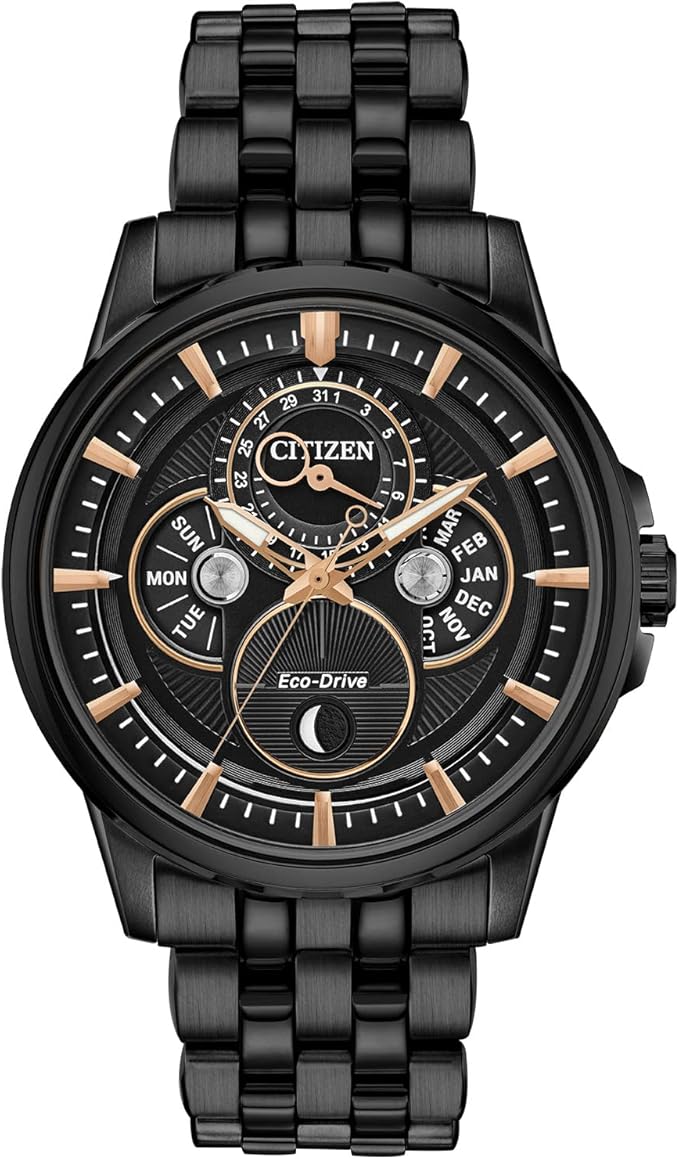
The stealth version of the Calendrier — black ion-plated case, black bracelet, black dial. All the same Eco-Drive functionality and moon phase accuracy, wrapped in a more aggressive, modern aesthetic. A rare moon phase that could pass for a sport watch.

Swiss watchmaking at a price that makes sense. The Carré brings Geneva-quality finishing — gold plated case, intricate moon phase aperture, brown leather strap — to a surprisingly accessible price. When someone asks for a Swiss moon phase under $500, this is the answer.

Japan's answer to affordable automatic moon phases. In-house Orient movement, no battery required, day/night indicator alongside the moon phase. Clean, understated dial design that punches well above its price. A reliable choice from one of Japan's most respected movement manufacturers.

The world's first moon phase watch with atomic timekeeping. Citizen's proprietary Eco-Drive technology combined with radio-controlled accuracy means the moon phase syncs automatically — an extraordinary technical achievement. Super Titanium case makes it 40% lighter than steel and five times harder.
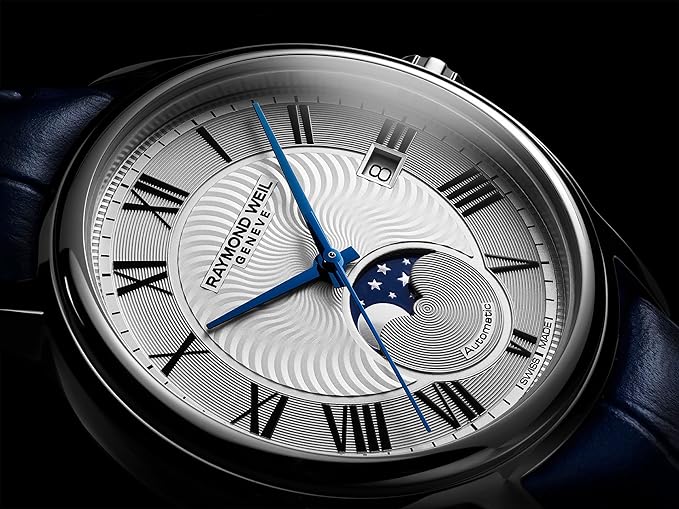
Swiss independent watchmaking with serious moon phase pedigree. Silver dial, Roman numerals, automatic movement, and a star-filled blue moon phase aperture at 6 o'clock. The Maestro is Raymond Weil's flagship dress collection — refined, elegant, and built for occasions that demand something special.

Orient's premium moon phase play — limited edition, blue dial, stainless bracelet, exhibition caseback, and sapphire crystal. In-house automatic movement, 41.5mm case, and display quality that competes with Swiss watches costing twice as much. The best all-in moon phase from Japan.
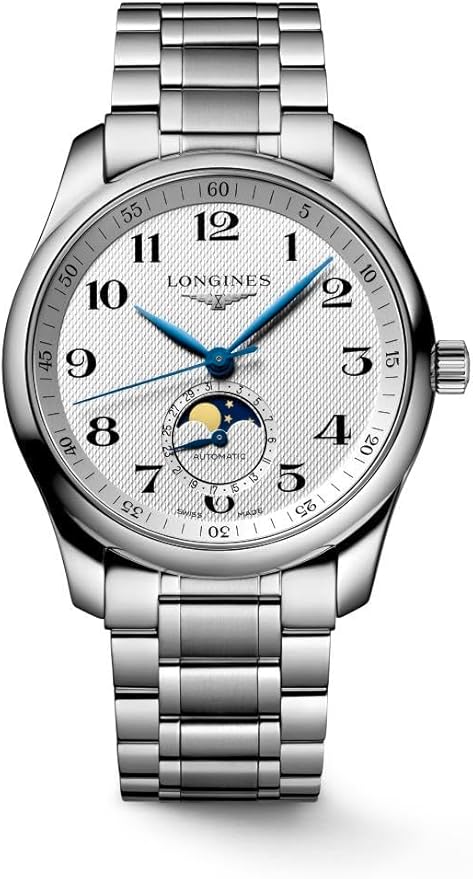
Swiss manufacture at the peak of accessible luxury. Barleycorn guilloché silver dial, stainless bracelet, 42mm, automatic ETA-based caliber with 64-hour power reserve. The 6 o'clock sub-dial combines moon phase, date scale, and seconds hand in a masterclass of dial design. Longines at its very best.

The watch that went to the moon, now with an actual moon phase complication. The Co-Axial Master Chronometer 9904 movement is certified at 15,000 gauss — immune to magnetic fields that stop lesser watches cold. Blue ceramic tachymeter bezel, blue sun-brushed dial, and a radial calendar display. Extraordinary.

The pinnacle of moon phase watchmaking. A perpetual calendar that displays day, date, month, leap year, and moon phase — automatically accounting for month lengths and leap years, never needing a correction until 2100. Platinum case. Caliber 31-260 RE PS IRM QA LU movement. The grail.
What Is a Moon Phase Watch?
A moon phase complication tracks the lunar cycle — typically a rotating disc beneath a dial aperture showing the illuminated portion of the moon. The disc completes one rotation every 29.5 days, mimicking the actual lunar cycle from new moon to full moon and back. Most moon phase displays use a 59-tooth wheel driven by the movement, advancing the disc exactly once per day.
The accuracy of the display varies by price tier. An entry-level moon phase accumulates about one day of error every 2.5 years — easily corrected with a push of a button. High-end moon phases from Patek Philippe and A. Lange & Söhne are so precisely calibrated they require adjustment just once every 122 years.
The complication dates to the 16th century, when it appeared on pocket watches used for agricultural planning and tide prediction. Today it's a pure expression of watchmaking art — a tiny, rotating window to the cosmos.
Moon Phase Buying Guide
Under $300: Quartz is Fine
At this tier, a quartz moon phase is perfectly adequate — the Fossil Neutra, Timex Waterbury, and Citizen Calendrier all display the lunar cycle accurately and affordably. Don't pay more for an automatic movement at this price range.
$300–$1,500: Go Automatic
The Orient Sun & Moon and Raymond Weil Maestro are where Japanese and Swiss automatic moon phases become genuinely compelling. You get a self-winding movement with display quality that justifies the price jump over quartz.
Display Quality Matters
The best moon phase displays show the moon against a star-filled blue sky with a sharp, detailed disc. Avoid flat, painted discs. At the Longines and Omega level, the display quality becomes genuinely artistic.
Accuracy vs. Beauty
Most moon phases require correction every few years. If perfect accuracy matters to you, the Citizen Tsuki-yomi's atomic timekeeping means it auto-corrects — the only moon phase watch that does so automatically.