
The pilot watch has one of the most honest origin stories in watchmaking. There was no marketing brief, no lifestyle aspiration, no demographic to flatter. There was a cockpit, a set of instruments, and the need for a pilot to read the time accurately and immediately under conditions of stress, vibration, poor light, and leather gloves. The watch that emerged from that brief — large crown, high-contrast dial, clear numerals, anti-magnetic protection — turned out to be exactly what a great everyday watch looks like. Which is either a remarkable coincidence or evidence that good design transcends context. Probably both.
Today most pilot watch owners are no closer to a cockpit than the rest of us. That's fine. The design that made these watches work at altitude makes them work everywhere else. A dial designed to be read at a glance while managing an aircraft is equally readable at a glance while managing a Monday morning. The large crown that could be operated with gloves is simply a satisfying crown to wind. The anti-magnetic protection keeps the movement accurate near the laptops, phones, and speakers that fill a modern desk.
Where Pilot Watches Came From
The early history of aviation and the early history of the wristwatch are closely intertwined. Pocket watches were useless in a cockpit — a pilot needed both hands on the controls. The wristwatch, still a relatively new concept in the early 20th century, solved that problem immediately. By the First World War, military pilots were wearing purpose-built wristwatches with large dials and luminous markings.
The Second World War accelerated the development dramatically. The German Luftwaffe's specification for a pilot's watch — known as the B-Uhr, or observer's watch — required a dial at least 55mm in diameter, clear Arabic numerals, a prominent triangle at 12 o'clock, and a movement accurate enough to navigate by. IWC, A. Lange & Söhne, Laco, Stowa, and others produced watches to this specification. The design became the template for the modern pilot watch.
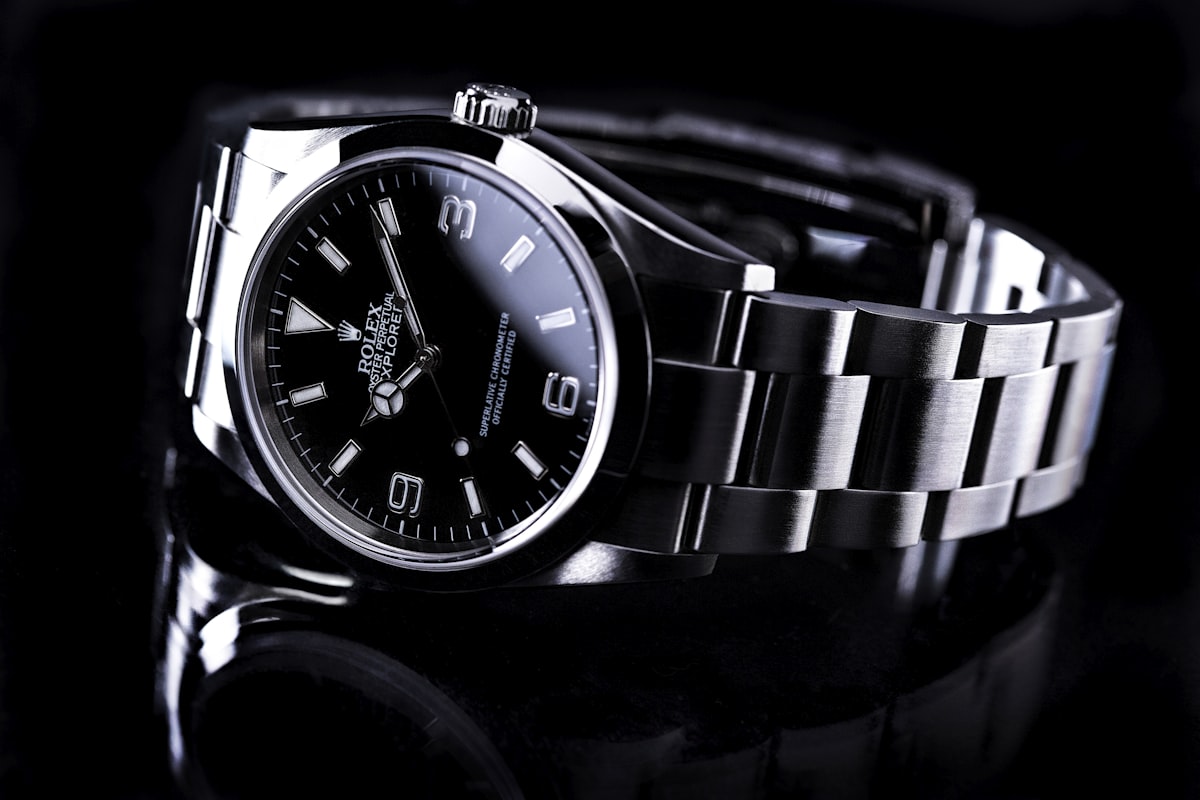
The B-Uhr dial design — triangle at 12, clear Arabic numerals, nothing superfluous — still in production in various forms today
Post-war, the pilot watch evolved in two directions. The tool watch tradition continued — IWC's Mark series, Breitling's Navitimer with its slide rule bezel, Hamilton's Khaki Aviation range. Simultaneously, a more design-led interpretation emerged, particularly from IWC's Big Pilot range and Jaeger-LeCoultre's Reverso, which took the heritage and turned it into something more sculptural. Both traditions are worth knowing.
"A dial designed to be read at a glance while managing an aircraft is equally readable at a glance while managing a Monday morning."
What Makes a Pilot Watch
The Dial
Legibility is everything. Pilot watch dials are typically black with white or cream markings — the highest contrast combination available. Numerals are large, clear Arabic figures. The minute track around the perimeter is prominent and evenly spaced. The hands are long, clearly differentiated between hour, minute, and seconds, and generously lumed. The triangle or arrow at 12 o'clock provides instant orientation — you know where 12 is before you've consciously processed it.
The Crown
The oversized crown — large enough to operate with gloved hands — is the most immediately recognisable feature of a traditional pilot watch. On the IWC Big Pilot it is almost absurdly large, and entirely correct. On the Hamilton Khaki Aviation it is simply more substantial than average. In both cases it winds and sets beautifully, which makes the functionality an unexpected pleasure rather than just a historical reference.
Anti-Magnetic Protection
Early aircraft cockpits were full of magnetic instruments that played havoc with mechanical watch movements. Anti-magnetic protection — typically a soft iron inner cage surrounding the movement — shields the escapement from magnetic fields. This is not merely historical interest. Modern life is full of magnetic interference — phone speakers, laptop clasps, bag clasps, some medical equipment. A watch with anti-magnetic protection keeps better time in a modern environment than one without it. The IWC Mark series soft iron cage is the benchmark for this feature.
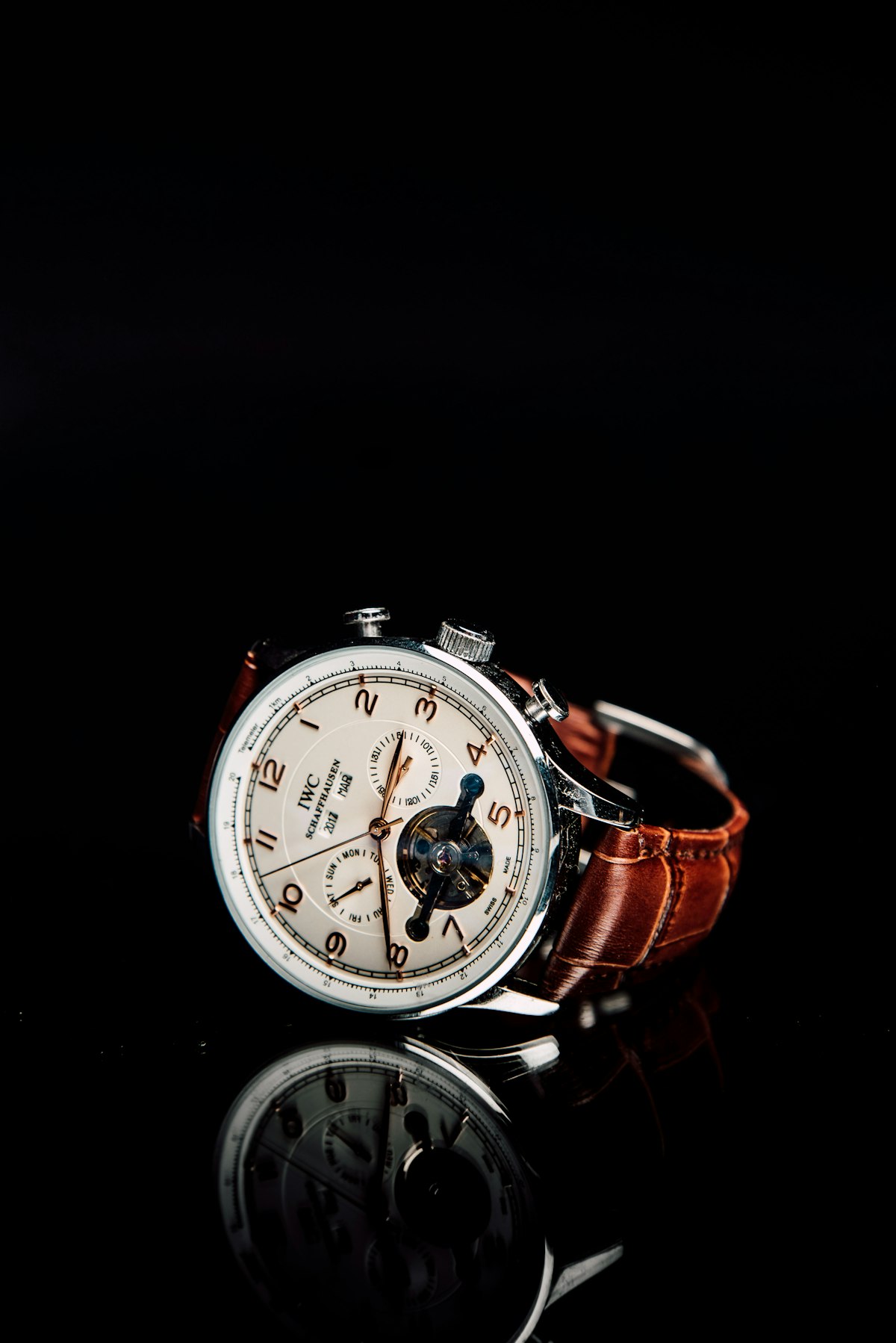
The oversized crown — functional in gloves, satisfying to wind without them
Why Pilot Watches Work for Daily Wear
The pilot watch solves the legibility problem that most watches don't acknowledge they have. How many times have you glanced at your wrist and had to look again to confirm what time it is? A good pilot watch eliminates that. The information is immediate and unambiguous. You look, you know, you move on. In the context of a busy day, that small efficiency is surprisingly satisfying.
The dial proportions also work well across contexts. A pilot watch tends toward the slightly larger end of the case size spectrum — 40-42mm is typical — but because the dial uses all of that space for information rather than decoration, it wears with more purpose than a sports watch of similar dimensions. There is no wasted space. Everything on the dial is doing something.
On a leather strap — brown or black, depending on your preference — a pilot watch has a slightly military, slightly vintage character that works well in professional and casual contexts alike. On a fabric or NATO strap it's more casual. On a bracelet, for those pilot watches that offer one, it crosses toward sports watch territory without quite getting there. The category has genuine range.
A note on size: The B-Uhr originals at 55mm were designed to be worn over a flight suit, not a shirt sleeve. Modern pilot watches at 40-43mm are well proportioned for daily wear. The IWC Big Pilot at 46mm is a deliberate reference to the originals and wears as a statement. Know which you want before you buy — the "authentic" large pilot watch look is genuinely impressive but requires a certain commitment of wrist.
JW's Pilot Watch Picks
Hamilton Khaki Aviation Pilot — Best Entry Point
Swiss made, H-10 movement, 80-hour power reserve, clean pilot's dial. Hamilton's aviation range is the most accessible entry point into serious pilot watches — Swiss quality, honest design, priced fairly. The automatic version offers 80 hours of reserve which means it survives a long weekend without winding. Full details in our $500-$1K guide.
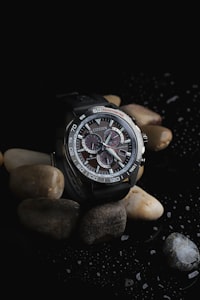
Oris Big Crown ProPilot — Best Value Swiss Pilot
Large crown, pointer date, aviation heritage, Swiss automatic. Oris makes the case that you don't need to spend IWC money to own a genuinely excellent pilot watch. The ProPilot's oversized crown is the real thing — functional, well finished, and very satisfying to operate. See our Best Oris Watches guide.
IWC Pilot's Watch Mark XX — The Benchmark
Soft iron cage, 32111 calibre, 100m, clean Mark-series dial. The Mark series is IWC's longest-running watch line and consistently their most honest — a pilot watch that makes no concessions to fashion and is better for it. Decades of refinement have produced something very close to perfect in its category. Full details in our $5K-$10K guide.
IWC Big Pilot's Watch — The Statement
46mm, 7-day power reserve, in-house 52110 calibre, the most direct reference to the B-Uhr originals in current production. For those who want the full historical statement on their wrist. Wears large, looks correct, impossible to misread. Browse our $20K+ guide for the full range.
The JW Verdict
The pilot watch is one of the great honest categories in watchmaking — designed for a specific purpose, refined over decades of genuine use, and then adopted by the rest of the world because the design was simply too good to stay in cockpits. You don't need to fly to appreciate what these watches do well. You just need to value legibility, robustness, and a dial that tells you the time the moment you look at it.
Start with the Hamilton if budget is the priority. Consider the Oris ProPilot for the most satisfying crown experience at a reasonable price. Move to the IWC Mark XX when you want the benchmark. And if you ever find yourself wanting something that occupies the wrist like a piece of history — the Big Pilot is waiting, and it is not subtle, and it is entirely right.