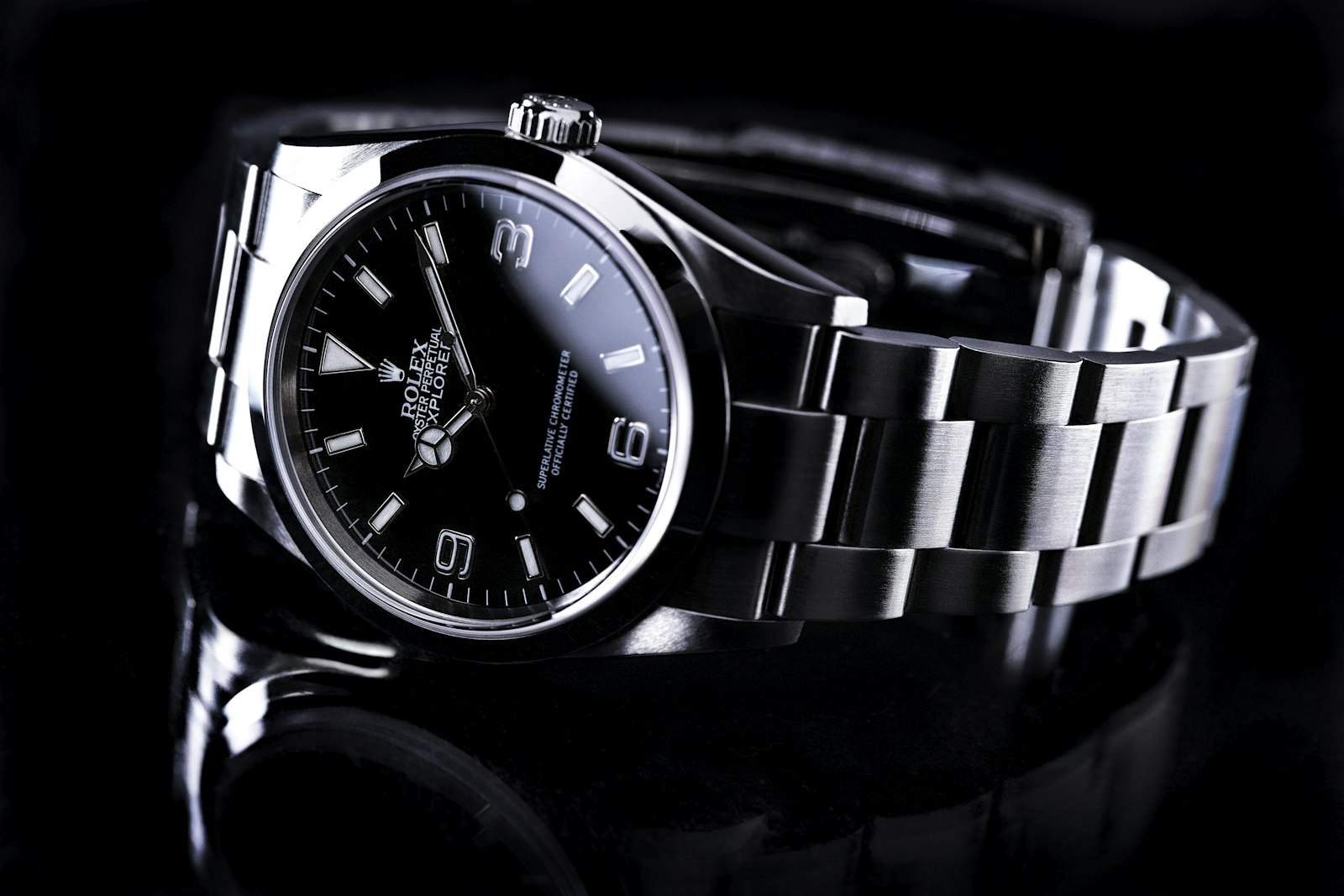
Let's get something out of the way immediately. Automatic watches are objectively less accurate than a $15 Casio. They cost more to maintain, they stop if you don't wear them, and they require servicing every five years or so — at a cost that will make you briefly reconsider your life choices. The watch industry knows this. They just prefer not to lead with it.
And yet. Here I am, surrounded by automatic watches, writing this article, with absolutely no plans to stop buying them. So what's actually going on?
How an Automatic Watch Actually Works
Before we get into the philosophy, let's cover the mechanics — because understanding how these things work is half the reason people fall in love with them.
An automatic watch (also called a self-winding watch) is powered by a mainspring — a coiled strip of metal that stores energy. As you move your wrist throughout the day, a weighted rotor spins freely and winds the mainspring automatically. No battery required. No charging. Just physics doing its thing.
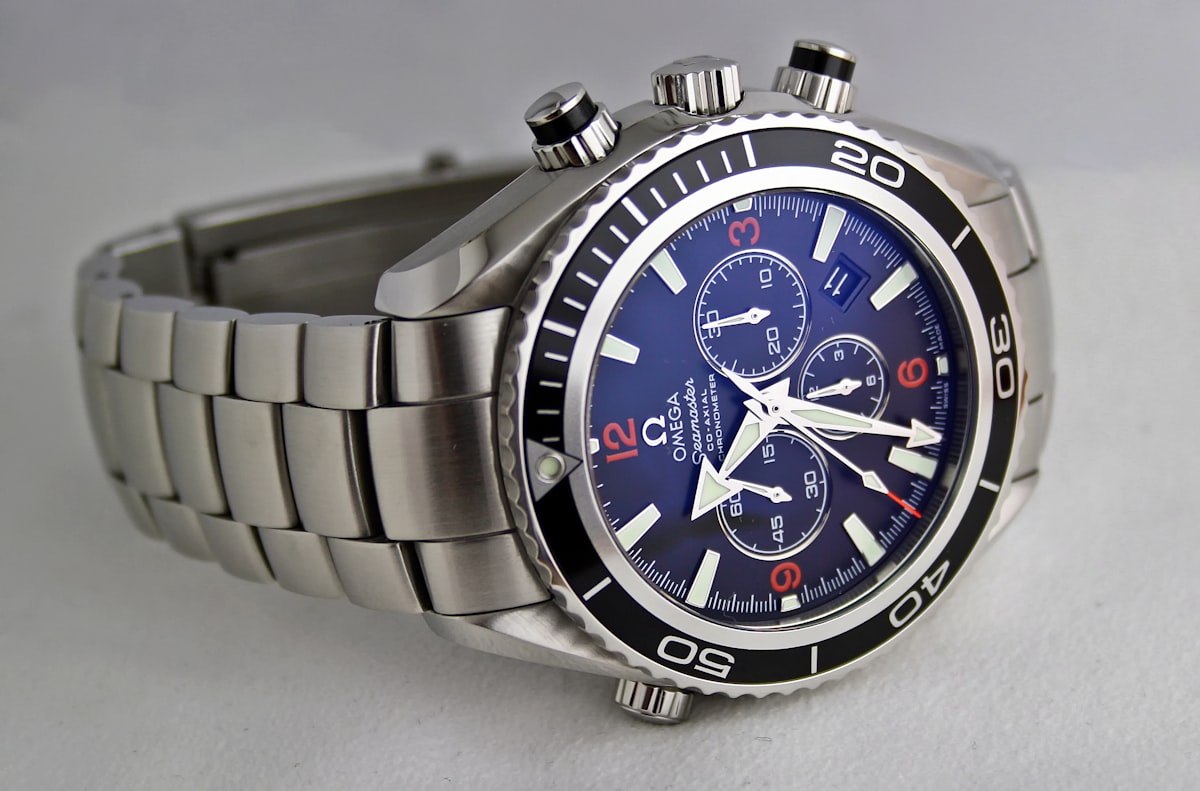
The beating heart of an automatic watch — hundreds of tiny components working in concert
The energy from the mainspring is released in controlled increments through the escapement — a mechanism that creates the characteristic tick you hear. The balance wheel oscillates back and forth, dividing time into equal segments. In a typical watch this happens six to ten times per second, every second, for as long as the watch is wound.
A decent automatic movement contains somewhere between 100 and 400 individual components. The most complex have over a thousand. They are assembled by hand, by trained watchmakers, often under magnification. When you understand that, the price tags start to make a little more sense. Not total sense. But some.
"A mechanical watch is one of the only objects you can own that gets more interesting the more you understand it."
The Inconvenient Truths
The watch industry has a vested interest in making you feel that automatic equals superior. It doesn't — at least not on every metric. Here's what they'd rather you didn't think too hard about.
Accuracy
A standard automatic movement runs to about ±10-25 seconds per day. A COSC-certified chronometer — the gold standard in mechanical accuracy — is rated to ±4 seconds per day. Meanwhile, a quartz movement keeps time to ±15 seconds per month. Your phone keeps time to within milliseconds. If accurate timekeeping is your primary concern, an automatic watch is the wrong tool for the job. A $20 Casio will outperform a $10,000 Rolex at keeping time.
Reliability
Modern automatic movements are extremely reliable — but they are not maintenance-free. Every 5-8 years, the lubricants inside dry out and need replacing. A basic service on a Swiss automatic typically runs $300-$800. On a vintage piece or complicated movement, you can double or triple that. Budget for it when you budget for the watch.
Convenience
If you don't wear your automatic watch for a day or two, it stops. When you pick it back up, you'll need to wind it and reset the time and date. The watch industry frames this as a drawback. I'd argue the opposite. Picking up a watch, giving it thirty seconds of winding, and feeling it come alive in your hands is one of the small rituals that makes owning a mechanical watch different from owning any other timekeeping device. It's not a chore — it's a connection. A quartz watch doesn't ask anything of you, and in return you feel nothing for it. An automatic watch that needs winding is an automatic watch that notices when you're paying attention.

Beauty and complexity in equal measure — but accuracy isn't part of the pitch
The Case For Automatic Anyway
So why do millions of people spend thousands of dollars on these impractical, fussy, gloriously unnecessary objects? Because value isn't only measured in accuracy.
There is something genuinely remarkable about a watch that runs without a battery, powered entirely by the motion of your wrist. Something that connects you to a 500-year-old tradition of mechanical ingenuity. When you hold a well-made automatic watch to your ear and hear it ticking, you're listening to somewhere between 150 and 360 beats per minute of controlled mechanical energy. That doesn't get old.
There's also the matter of longevity. A quartz watch becomes landfill when its circuit board fails. A mechanical watch can be serviced indefinitely. There are automatic watches from the 1950s still running perfectly today. With care, a good automatic watch can outlast you and pass to the next generation. That changes how you think about the purchase.
And — this matters — they look better. The dial of an automatic watch tells you something is happening beneath the surface. The sweep of the seconds hand (no tick-tick-tick, just a smooth continuous sweep) is deeply satisfying in a way that's hard to explain and easy to feel.
The Case For
- No battery — ever
- Serviceable indefinitely
- Appreciates in value (some models)
- Mechanical artistry on your wrist
- Smooth sweeping seconds hand
- A genuine heirloom piece
The Case Against
- Less accurate than quartz
- Winding ritual not for everyone
- Requires periodic servicing
- More expensive upfront
- More vulnerable to magnetism
- Service costs add up over time
Who Should Buy an Automatic Watch
Automatic watches are for people who wear a watch every day and want that watch to mean something. They're for people who find the idea of a battery-powered watch slightly depressing. They're for people who look at a ticking mechanism and think "I want to understand how that works" rather than "who cares how it works."
They are probably not for people who need a watch for sport and precision timing. They're not ideal as a second watch you pick up occasionally — they'll stop and need resetting constantly. And they're not for anyone who sees a watch as purely a functional object. There are better tools for that job at a fraction of the price.
What to Expect at Each Budget
The good news is that automatic movements have gotten dramatically better at every price point over the last decade. Here's a honest breakdown of what your money actually buys:
Under $200: Orient and Seiko dominate this space, and they do so with remarkable quality. The Seiko 5 SNK809 at around $120 has an in-house movement, a see-through caseback, and has been running reliably for decades. It won't win any accuracy competitions but it won't embarrass you either. This is the correct first automatic watch for most people.
$500-$1,500: This is where Swiss manufacturing enters the picture in earnest. Hamilton, Tissot, and Longines all produce movements with 80-hour power reserves, silicon balance springs, and COSC chronometer certification. The accuracy gap versus quartz narrows considerably. Browse our $500-$1K guide and $1K-$2K guide for the best options here.
$2,000-$5,000: Tudor, Oris with their Calibre 400, and the better Seiko Prospex models. In-house movements, serious finishing, and watches that will genuinely outlast you with proper care. See our $2K-$3K and $3K-$5K guides.
$5,000+: Omega, IWC, Grand Seiko, and Rolex. Master Chronometers, Zaratsu polishing, movements regulated to tolerances that make the accuracy argument largely academic. These are objects of genuine craft. Our $5K-$10K guide covers the best of them.
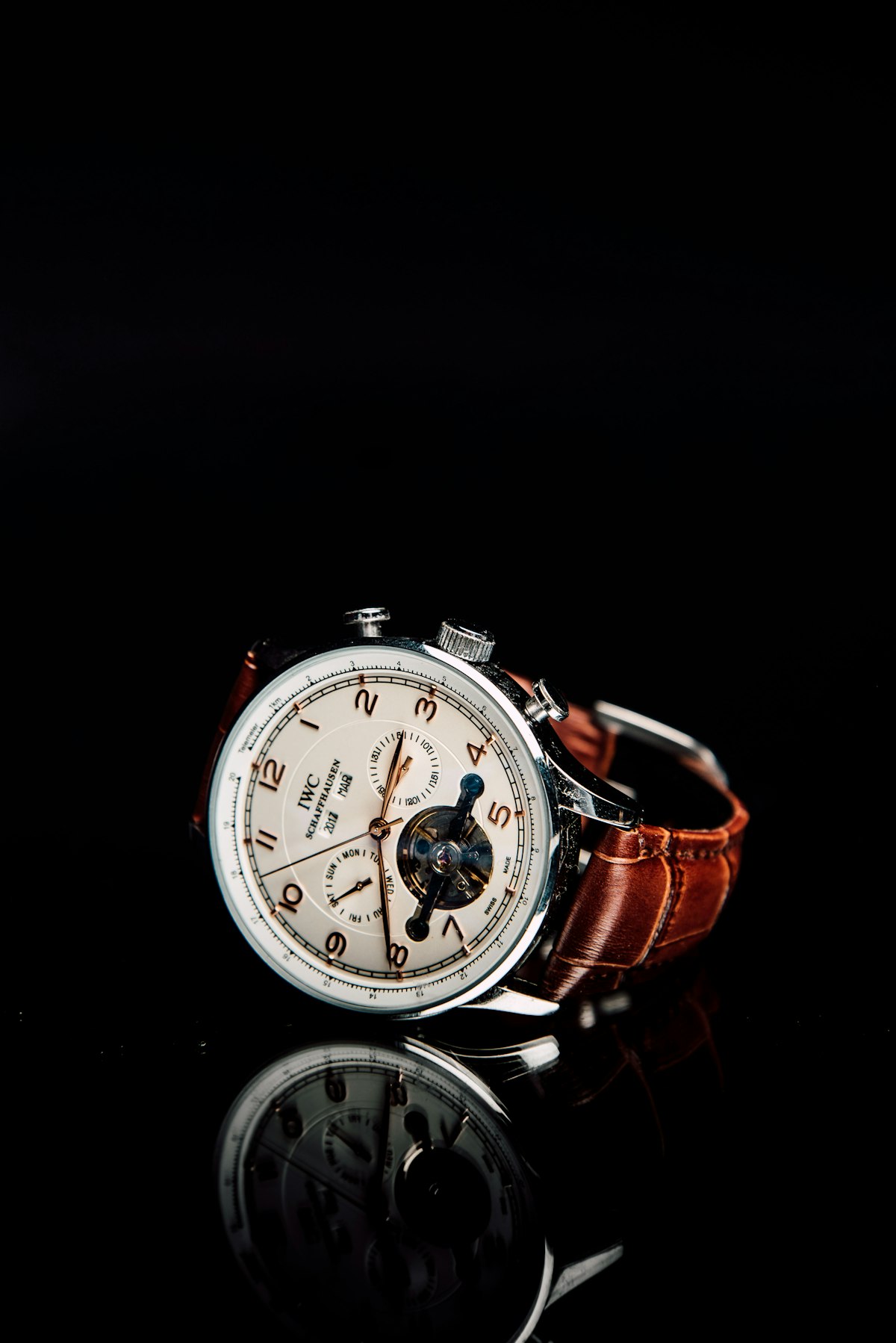
From $120 Seikos to $10,000 Omegas — automatic movements at every price point
JW's Picks: The Best Automatics Right Now
Across every budget, these are the automatic watches I'd actually recommend to someone asking me in person:
Seiko 5 SNK809 — Best Entry Point
In-house movement, exhibition caseback, day-date display. The correct first automatic for virtually everyone. Has been making people happy for decades and shows no sign of stopping.
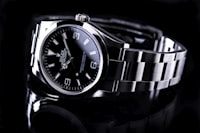
Hamilton Khaki Field Mechanical — Best Under $500
Swiss-made, hand-wound (yes, manual wind counts), 80-hour power reserve, vintage military aesthetic. Exceptional value and a watch that rewards you the more you understand it.
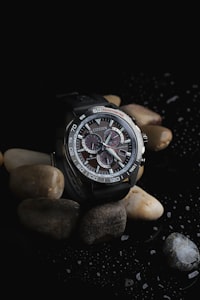
Tudor Black Bay Fifty-Eight — Best $3K-$5K
In-house MT5402 movement, 200m water resistance, 39mm case that sits perfectly on almost any wrist. The most complete package in its price range. Full breakdown in our Best Tudor Watches guide.

Omega Seamaster Diver 300M — Best Splurge
Master Chronometer certified, anti-magnetic to 15,000 gauss, wave-pattern ceramic dial. The accuracy argument against automatics largely evaporates at this level. Our full take is in the Best Omega Watches guide.
The JW Verdict
Buy an automatic watch if you want a daily companion that rewards attention, improves with understanding, and will still be running long after you're gone. Embrace the winding ritual — picking up a watch that's been sitting for a day, giving the crown a few turns, and feeling the movement engage is one of the small pleasures that separates mechanical watch ownership from simply checking the time. Don't buy one expecting it to keep better time than your phone — it won't, and that's entirely beside the point.
Start with a Seiko if budget is a concern. Move to a Hamilton or Tudor when you're ready to spend more. Consider Omega or Grand Seiko when you want something that genuinely competes with the best Swiss manufacturing in the world.
The inconvenient truth the industry doesn't want you to focus on is real. Automatics are impractical, inaccurate by comparison, and expensive to maintain. They are also wonderful. Both things are true, and knowing both makes you a smarter buyer.