Why a Power Reserve Watch?
A power reserve indicator tells you how much energy remains in a mechanical watch's mainspring — essentially, how long before it stops. Displayed as an arc or linear scale on the dial, it answers the practical question every automatic watch owner eventually asks: "Is this going to stop on me today?"
Beyond the practical, a power reserve indicator is a window into the movement itself — an honest declaration of mechanical complexity. The best examples, like the Lange 1's iconic Auf/Ab display at 12 o'clock, become defining features of the watch's design. From sub-$400 Japanese automatics to German silver grails, these are the power reserve watches worth owning.
9 Power Reserve Watches Worth Owning

Seiko's most beautiful Presage plays the full hand: a deep midnight-blue cocktail dial, in-house automatic movement, power reserve indicator, and exhibition caseback showing the 4R57 caliber at work. Hugely popular on Amazon, and deservedly so — there's nothing better at this price.
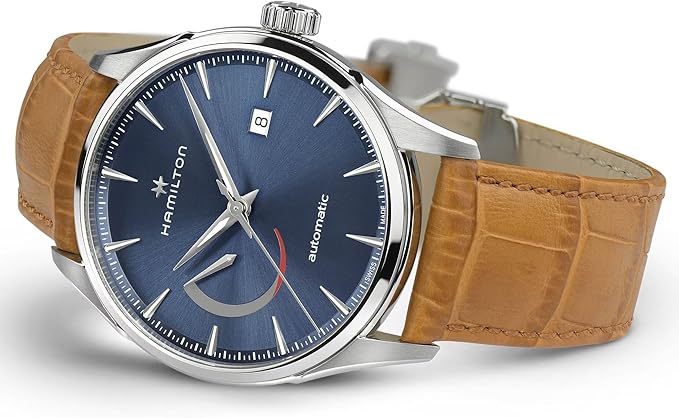
The Swiss benchmark at this price tier. Hamilton's new H-13 movement delivers 80 hours of power reserve — displayed on a clean red-tipped arc at 9 o'clock — with the kind of movement finishing you'd expect to cost far more. Blue sunray dial, sapphire crystal, exhibition caseback.

Swiss-made sport watch with an 80-hour Powermatic 80 movement and a prominent power reserve indicator on the dial. Mido's Multifort has always been an underrated workhorse — rugged build, silicon hairspring for magnetic resistance, and a no-fuss tool watch aesthetic that wears well every day.

Orient Star is Orient's premium line, and the Contemporary Power Reserve shows why it deserves more attention. In-house F6R43 movement with a power reserve indicator arc on the dial, sapphire crystal, and a refined dress watch design. Japanese finishing quality at a fraction of Swiss prices.

German-made automatic with a distinctive power reserve gauge at 9:30 — not a common arc but a proper sectored indicator dial, like a fuel gauge. "Clous de Paris" guilloché dial texture, Arabic numerals, and a 24-hour sub-display. Understated and genuinely interesting at this price.

A Chinese microbrand turning serious heads in the enthusiast community. The Seagull ST1908 movement is a column-wheel, vertical clutch chronograph with a genuine power reserve indicator — complexity that belongs in a much more expensive watch. Brown racing leather strap, panda dial. Remarkable value.

IWC's 7-day power reserve Portugieser is one of the great dress watch statements. The Calibre 52010 uses a Pellaton winding system with ceramic components for near-zero wear — hence the 168-hour reserve. Two subdials at 3 and 9 o'clock display small seconds and power reserve in perfect symmetry.
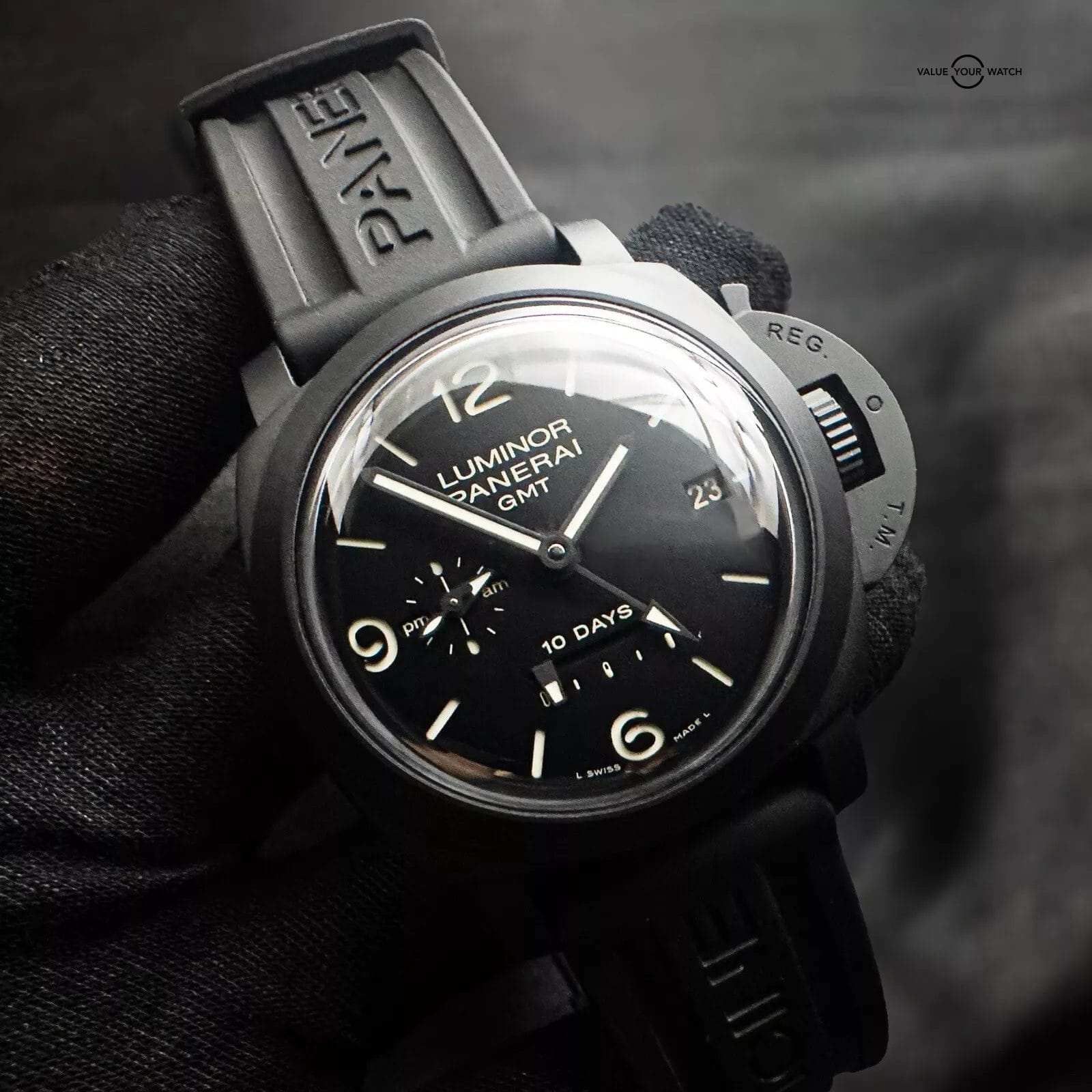
Ten days. 240 hours. Three barrels in the in-house P.2003 movement store enough energy to run for a week and a half without winding. The power reserve arc on the dial is almost comically generous. Black ceramic case, GMT function, 300m water resistance — uncompromising in every dimension.
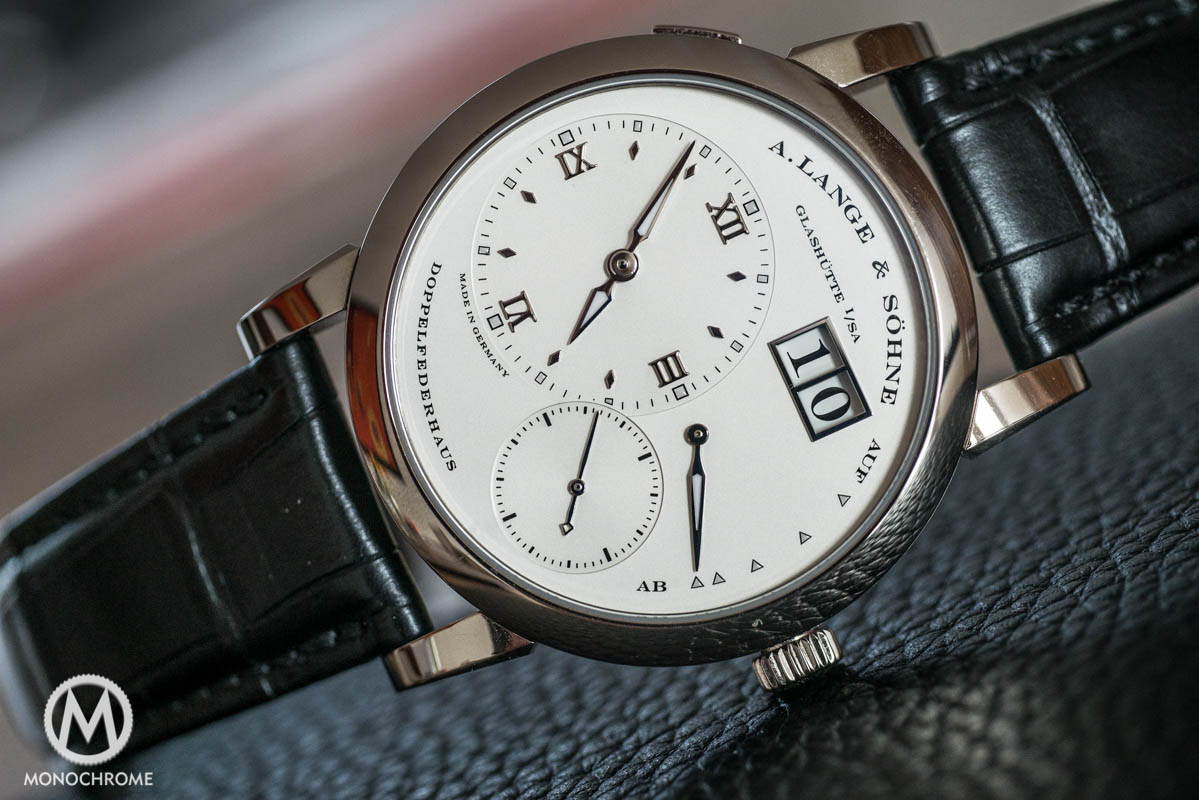
The power reserve indicator that every other was measured against. Auf (full) and Ab (empty) inscribed beneath the arc at 12 o'clock — spare, elegant, and utterly definitive. German silver three-quarter plate, hand-engraved balance cock, outsize date. The grail of power reserve watches.
What Is a Power Reserve Indicator?
A power reserve indicator shows how much energy remains stored in a mechanical watch's mainspring. As you wear or wind the watch, the mainspring coils tighter and stores energy; as the watch runs, that energy releases. The indicator — typically an arc or scale on the dial — tells you where you are in that cycle.
On a manual-wind watch, the power reserve is essential information: you need to know when to wind. On an automatic, it's more of a convenience indicator — useful for knowing whether a watch you're returning to after a few days still has enough juice to run accurately, or whether it needs a few shakes or a manual top-up.
The classic display is the Auf/Ab (up/down) indicator from German watchmaking — Lange's at 12 o'clock is the most celebrated. Swiss makers typically use a simple arc with "Full" and "Empty" endpoints. Either way, it's one of the most useful complications you can have on a mechanical watch.
Power Reserve Buying Guide
Manual vs. Automatic
A power reserve indicator is most useful on a manual-wind watch — it tells you when to wind. On an automatic, it's a convenience feature. If you're buying for practicality, prioritise manual-wind watches with the indicator.
How Much Reserve Do You Need?
Most automatics give 40–50 hours. The Hamilton's 80 hours means it survives a long weekend off the wrist. The IWC Portugieser's 7-day reserve means you can leave it until next Thursday. More is genuinely more useful.
Display Design Matters
Some power reserve indicators enhance the dial; others clutter it. Lange's Auf/Ab arc at 12 is a design masterclass. The Hamilton's red-tipped hand is clean and legible. Avoid watches where the indicator fights for space with other complications.
Best Entry Point
The Seiko Presage and Zeppelin Friedrichshafen are the best affordable ways into the category. Both show the power reserve clearly, run in-house movements, and cost a fraction of Swiss alternatives. Start there.