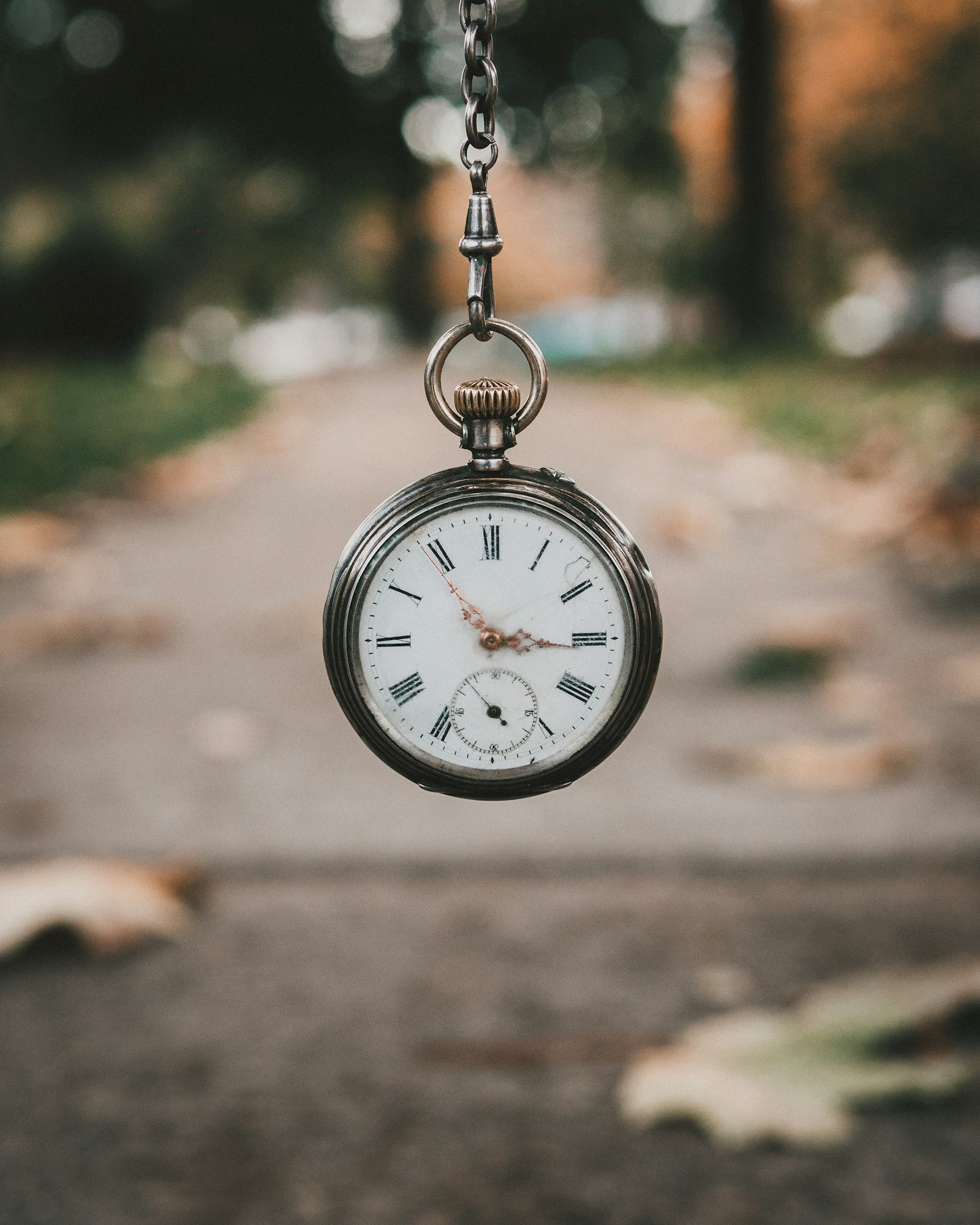
In watch collecting circles, admitting you prefer quartz is roughly equivalent to showing up to a wine tasting and announcing you prefer Capri Sun. The mechanical faithful will nod politely and change the subject. It's been this way since 1969, when Seiko unleashed the Astron — the world's first quartz wristwatch — and accidentally started a war that nearly destroyed the Swiss watch industry. A war that, if we're being honest about the numbers, quartz won decisively.
And yet here we are, in 2026, with quartz watches still treated as the embarrassing cousin at the horological family reunion. It's time for a reappraisal. Not because mechanical watches aren't wonderful — they are, as we covered in our — but because quartz deserves credit for what it actually is: one of the most precise, reliable, and democratising technologies in the history of timekeeping.
How Quartz Actually Works
A quartz watch keeps time using a tiny sliver of quartz crystal — the same mineral you find in sand and granite — cut to a precise size and subjected to an electrical current from a battery. The crystal vibrates at exactly 32,768 times per second. A circuit counts those vibrations, divides them down to one per second, and uses that to drive the hands or display.
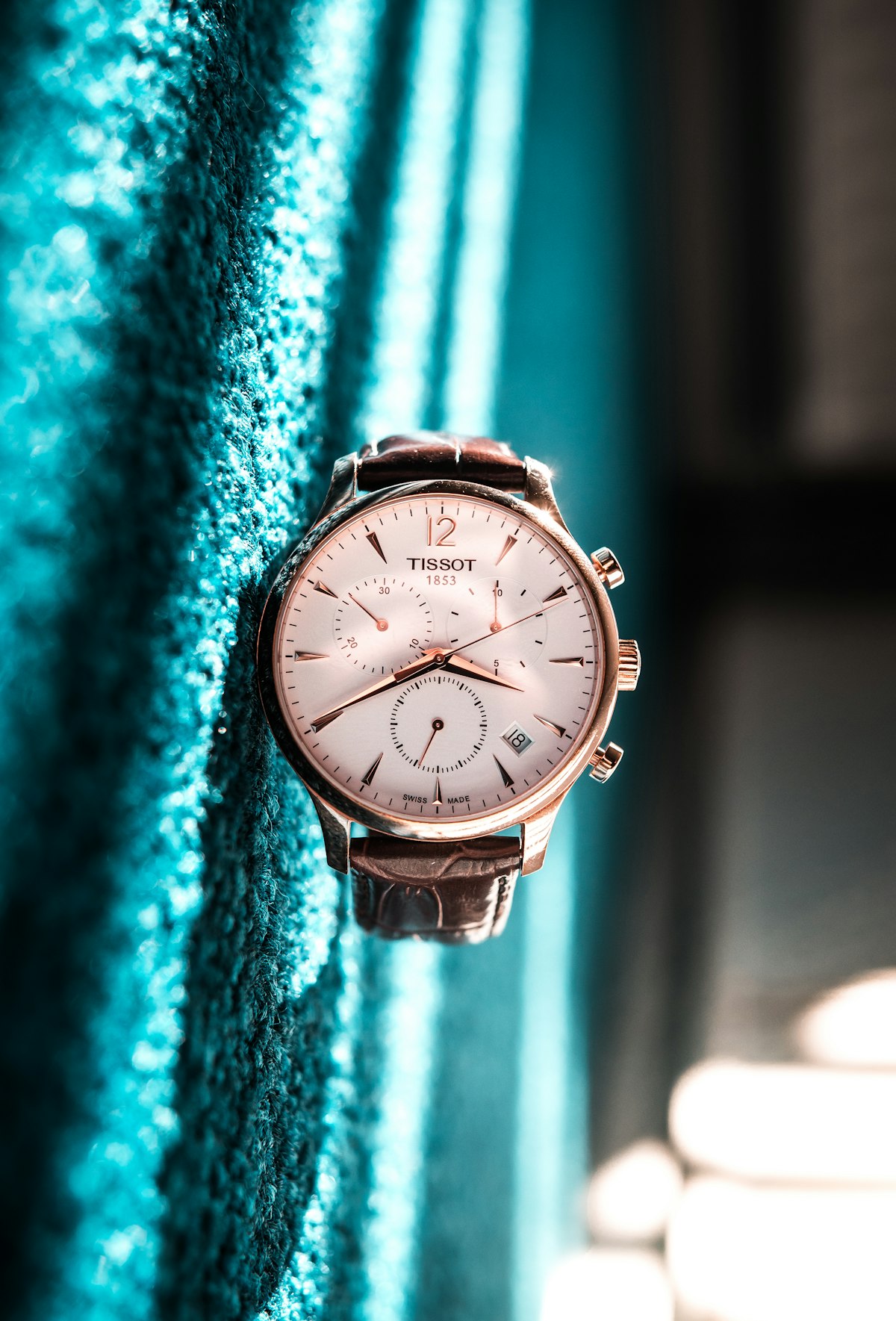
Deceptively simple — quartz movements contain far fewer parts than mechanical ones, which is both a feature and, to some, a flaw
The elegance of quartz is in its simplicity. Fewer moving parts means fewer things to go wrong. The vibration rate of quartz crystal is extraordinarily consistent, which is why even the cheapest quartz watch keeps better time than the finest mechanical movement money can buy. A $15 Casio and a $500 Rolex Oysterquartz are running to the same basic principle — one just does it with considerably more style.
"The Quartz Crisis didn't nearly destroy the Swiss watch industry because quartz was bad. It nearly destroyed it because quartz was extraordinarily good."
The Quartz Crisis — A Brief History Lesson
To understand why quartz is still treated with suspicion in watch circles, you need to know what happened between 1970 and 1985. The Quartz Crisis — also called the Quartz Revolution, depending on which side you were on — saw Swiss watch exports collapse by 40%. Roughly half the Swiss watch industry's workforce lost their jobs. Hundreds of manufacturers closed.
The Swiss had actually invented quartz watch technology themselves — the Centre Electronique Horloger developed the first Swiss quartz prototype in 1967, two years before Seiko brought it to market. Then, inexplicably, they decided it wasn't worth pursuing commercially. Seiko disagreed. So did Texas Instruments, Timex, and a dozen Asian manufacturers who promptly flooded the market with accurate, affordable quartz watches that made mechanical movements look expensive and impractical by comparison.
The Swiss survived by doing what they've always done when cornered — doubling down on craft, tradition, and the argument that mechanical watchmaking is an art form rather than a timekeeping technology. They weren't wrong. But the defensiveness that argument required has lingered in watch culture ever since, manifesting as a reflexive snobbery toward quartz that doesn't entirely hold up to scrutiny.

The Quartz Crisis reshaped an entire industry — its cultural shadow still falls over watch collecting today
The Genuine Case for Quartz
Set aside the history and the snobbery, and quartz has a genuinely compelling case on its own merits.
Accuracy That Actually Matters
A standard quartz movement keeps time to within ±15 seconds per month. A temperature-compensated quartz (TCXO) movement — found in watches like the Citizen Eco-Drive Caliber F900 — keeps time to within ±5 seconds per year. The finest mechanical chronometer is rated to ±4 seconds per day. If you care about actually knowing what time it is, quartz is the rational choice. For most people, being off by several minutes per year is entirely acceptable. Being off by several minutes per week — which a standard automatic can manage — is less so.
Reliability and Low Maintenance
A quartz movement has dramatically fewer moving parts than a mechanical one. Fewer parts means fewer failure points. A well-made quartz watch can run for decades with nothing more than an occasional battery change — typically every 1-3 years at a cost of a few dollars. Compare that to the 5-8 year service cycle of a mechanical watch at $300-$800 per visit, and the economics shift considerably.
Accuracy Under Pressure
Mechanical movements are sensitive to position, temperature, magnetism, and shock. A quartz movement largely doesn't care. This makes quartz the obvious choice for tool watches that actually get used as tools — military watches, dive computers, pilot chronographs where split-second accuracy matters. There's a reason the military specification for field watches defaulted to quartz for decades.
Democratisation of Quality
Perhaps the most genuinely important thing quartz did was make accurate timekeeping available to everyone. Before quartz, a precise watch cost serious money. After quartz, a $20 watch could keep better time than a $2,000 mechanical. That's not a failure of craft — it's a triumph of technology. The same impulse that makes us appreciate fuel injection over carburettors, or digital cameras over film, should make us appreciate what quartz achieved.
The Case For Quartz
- Significantly more accurate than mechanical
- Minimal maintenance — just a battery
- Works in any position and temperature
- More shock and magnetic resistant
- More affordable at every price point
- Never needs to be worn or wound
The Case Against Quartz
- No mechanical artistry to appreciate
- Battery dies at inconvenient moments
- Less collectible and rarely appreciates
- Tick-tick-tick seconds hand (usually)
- Less emotional connection for many owners
- Circuit boards can fail irreparably
Where Quartz Deserves More Respect
The watch community acknowledges a few categories of quartz as legitimate — high-frequency chronographs, vintage Accutron tuning fork movements, Grand Seiko's Spring Drive (which is a fascinating quartz-mechanical hybrid). But even outside these special cases, there's a lot of excellent quartz being dismissed unfairly.
High-End Quartz
Citizen's Eco-Drive movements — solar powered, never needing a battery — are genuinely impressive pieces of engineering. Seiko's Spring Drive is so accurate it's used as a reference standard. Grand Seiko produces quartz movements so refined they're housed in cases that rival anything Switzerland makes. These aren't consolation prizes for people who can't afford mechanical. They're different expressions of the same pursuit of precision.
Vintage Quartz
The early quartz watches from the 1970s and 1980s are now genuinely collectible — the original Seiko Astron, early LCD digitals, the Pulsar LED watches that cost more than a car when new. The watch community is slowly recognising that these pieces have historical significance and real character. Give it another decade and vintage quartz will be properly mainstream collecting territory.
On the battery question: Yes, quartz watches need a new battery every year or two. It takes about two minutes and costs a few dollars. If that feels like too much of a commitment, solar-powered quartz — like Citizen's Eco-Drive line — removes even that. There is genuinely no category of watch ownership that requires less from you than a good solar quartz. Whether that appeals to you or leaves you cold is really a question of what you want from a watch, not a flaw in the technology.
When to Choose Quartz Over Mechanical
The honest answer is: quartz makes sense more often than watch culture admits. Here's a practical breakdown.
Choose quartz if you need a watch for sport, work, or situations where accuracy and durability matter more than romance. If you're a pilot, a doctor, a diver, a military professional, or anyone who looks at their watch to actually know what time it is — quartz is the rational choice.
Choose quartz if you rotate between multiple watches. An automatic that sits in a drawer stops running. A quartz watch picks up exactly where it left off. If you own several watches and wear them interchangeably, quartz is significantly less hassle.
Choose quartz if budget is a genuine constraint. The best watches under $100 are almost all quartz — and several of them are genuinely excellent. A Casio Duro dive watch at $55 will outlast, outperform, and out-time most mechanical watches at ten times the price. That's not a compromise. That's value.
Choose mechanical if you want a watch that rewards attention, connects you to a craft tradition, and has a story worth telling. Both choices are valid. Neither is wrong.
JW's Quartz Picks
Casio Duro MDV106 — Best Under $100
200m water resistance, rotating bezel, reliable Japanese quartz. Laughably good value. The watch that makes mechanical snobs quietly uncomfortable. See our full under $100 guide.
Citizen Eco-Drive Titanium — Best Solar Quartz
Solar powered, super-titanium case, never needs a battery. Citizen's Eco-Drive technology is one of the genuinely clever things in watchmaking. Full options in our $500-$1K guide.
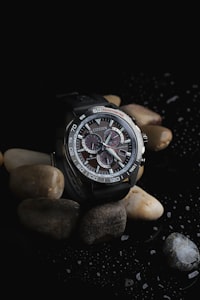
Bulova Precisionist Chronograph — Best High-Frequency Quartz
262kHz movement — eight times faster than standard quartz — gives a sweeping seconds hand that looks mechanical and accuracy that isn't. A genuinely interesting alternative to a Swiss automatic chrono.

Tissot PRX Quartz — Best Dress Quartz
Integrated bracelet, 1970s inspired design, Swiss made. For people who want the PRX look without the Powermatic price tag. Looks identical on the wrist. Keeps better time. Browse more at our $300-$500 guide.
The JW Verdict
Quartz isn't the enemy of fine watchmaking. It's a different pursuit entirely — one that prioritises accuracy, reliability, and accessibility over romance and tradition. Both have value. Both deserve respect.
The serious watch people who are finally admitting quartz wins aren't abandoning mechanical watches. They're just being honest about what quartz is actually good at. A Casio on your wrist during a run, a Grand Seiko Spring Drive for occasions, a vintage automatic for Sundays — that's not cognitive dissonance. That's a well-curated watch life.
Stop apologising for your quartz watches. They're keeping better time than everyone else's anyway.