
In 1977, a Seiko engineer named Yoshikazu Akahane wrote down a goal that his colleagues considered somewhere between ambitious and delusional: to build a watch powered entirely by a mechanical mainspring, with no battery, no external energy source of any kind — but regulated to quartz-level accuracy. His peers told him it was impossible. The laws of physics, they pointed out, did not especially care about his aspirations. He spent the next 22 years proving them wrong.
The result was the Spring Drive — a movement that is genuinely unlike anything else in watchmaking. Not quite mechanical, not quite quartz, operating on principles that still feel slightly miraculous when you understand them. It is one of the most original pieces of engineering in the 500-year history of the mechanical watch, and it comes from Japan, which the Swiss watch industry spent decades insisting couldn't produce serious horology. The Spring Drive is Seiko's quiet, devastating response to that particular piece of condescension.
The Problem Akahane Was Trying to Solve
To understand why the Spring Drive matters, you need to understand the fundamental tension at the heart of mechanical watchmaking. A mainspring stores energy beautifully — coiled metal, wound tight, releasing force gradually over hours or days. The problem is regulating how that energy is released. That's the job of the escapement, and mechanical escapements — however ingeniously designed — introduce friction, wear, and the slight inconsistencies that mean even the finest mechanical movements lose or gain a few seconds each day.
Quartz solved the accuracy problem by replacing the mechanical escapement with an electronic oscillator — a crystal vibrating 32,768 times per second, counted by a circuit. Perfect for accuracy. But it requires a battery, which means external energy, which means it isn't truly mechanical.
What Akahane wanted was the best of both worlds: mechanical energy storage, quartz-level accuracy, no battery. The watch world had concluded this was impossible. The problem was the regulator — there was no known way to create a purely mechanical escapement accurate enough to match quartz without external energy assistance.
"Akahane's colleagues told him it was impossible. He spent 22 years proving them wrong. The Spring Drive is what stubbornness looks like when it's pointed in the right direction."
The Elegant Solution
The breakthrough came from an entirely different direction. Instead of trying to make a mechanical escapement more accurate, Akahane eliminated the traditional escapement altogether and replaced it with something no one had used in a wristwatch before: an electromagnetic brake.
Here's how it works. The mainspring unwinds as normal, driving the gear train as in any mechanical watch. But instead of a traditional lever escapement controlling the release of energy, the Spring Drive uses a glide wheel — a smooth, frictionless disc — spinning freely at the end of the gear train. An electromagnetic coil monitors the speed of the glide wheel. A quartz crystal oscillator — powered not by a battery but by the tiny electrical current generated by the spinning glide wheel itself — provides the reference frequency. When the glide wheel spins too fast, the electromagnetic coil applies a braking force, slowing it down. When it spins at the correct rate, the brake releases. The glide wheel never stops — it simply glides, continuously, at exactly the right speed.
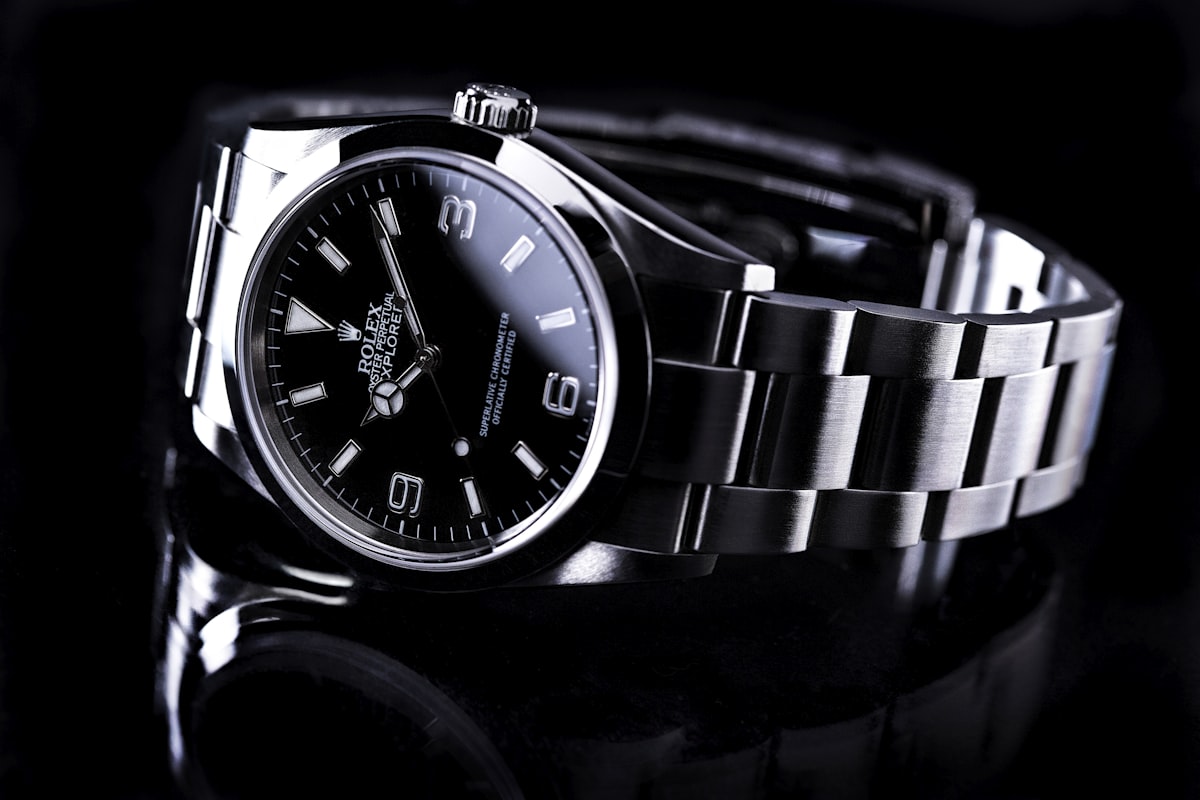
The glide wheel at the heart of the Spring Drive — spinning continuously rather than ticking, the source of that extraordinary seconds hand
The result is a movement with no friction loss at the escapement, no tick-tock interruption of energy flow, and accuracy to within ±1 second per day — significantly better than a standard mechanical chronometer and approaching the territory of temperature-compensated quartz. All powered entirely by a mainspring. No battery. Ever.
Watchmakers who understood what Akahane had achieved called it remarkable. Those who were being honest called it slightly miraculous. The laws of physics, it turned out, had left a loophole. He just needed 22 years to find it.
The Glide Motion Seconds Hand
There is a practical consequence of the glide wheel that is worth dwelling on. Because the glide wheel never stops — it brakes, but does not tick — the seconds hand of a Spring Drive watch moves in a perfectly continuous sweep. Not the staccato tick-tick of a quartz, not the jerky jump of a standard mechanical escapement. A true, uninterrupted glide around the dial.
On paper this sounds like a minor detail. On the wrist it is one of the most hypnotic things in watchmaking. Once you've seen a Spring Drive seconds hand moving, the tick of a standard mechanical feels slightly crude by comparison. It is the visual expression of what the movement actually is — something that doesn't stop, doesn't interrupt, just flows.
How to spot a Spring Drive in the wild: Look at the seconds hand. If it sweeps completely smoothly — not the eight-beat-per-second sweep of a high-frequency automatic, but truly uninterrupted — you're looking at a Spring Drive. It takes about three seconds of observation to see it. Once you know what you're looking for, you can't unsee it.
A Brief Timeline of the Spring Drive
Spring Drive vs Mechanical vs Quartz
| Feature | Standard Mechanical | Quartz | Spring Drive |
|---|---|---|---|
| Energy Source | Mainspring | Battery | Mainspring |
| Accuracy | ±4–25 sec/day | ±15 sec/month | ±1 sec/day |
| Seconds Hand | Sweeping (beats) | Ticking (steps) | True glide |
| Battery Required | No | Yes | No |
| Service Interval | 5–8 years | Battery every 1–3 years | 5–8 years |
| Escapement Type | Lever escapement | Electronic oscillator | Electromagnetic brake |
Grand Seiko and the Spring Drive
The Spring Drive found its natural home in Grand Seiko — Seiko's luxury division, producing watches that compete directly with Swiss haute horology at similar price points. Grand Seiko's philosophy has always been about perfection of the fundamental — dial finishing, case polishing, movement decoration — rather than complexity for its own sake. The Spring Drive fits that philosophy precisely. It is technically extraordinary without being ostentatiously complicated.
Grand Seiko Spring Drive watches are finished to a standard that genuinely rivals anything the Swiss produce. The Zaratsu polishing technique — where case surfaces are polished on a flat tin wheel to achieve mirror edges and matte contrasts simultaneously — is a hand process that takes considerable skill. The dials, often inspired by the landscapes of the Shinshu mountains where Grand Seiko's Shinshu Watch Studio is located, are among the most beautiful in all of watchmaking.

Grand Seiko dial finishing — inspired by Japanese landscapes, executed by hand, genuinely world class
The famous Snowflake dial — the SBGA211, officially named after the white birch forests of Nagano — has become one of the most recognised and coveted watch dials in the world. Its textured white surface captures light differently at every angle. Paired with the gliding seconds hand of the Spring Drive movement, it is a genuinely moving object. Which is a strange thing to say about a watch. But here we are.
JW's Spring Drive Picks

Grand Seiko Snowflake SBGA211 — The Icon
The textured white birch dial, Spring Drive calibre 9R65, titanium case. The watch that introduced most of the world to Grand Seiko. If you own one Spring Drive in your life, make a case for this being it. See it in our $10K–$20K guide.

Grand Seiko SBGR311 — The Dresser
Stainless steel, white dial, 9S65 mechanical movement — the non-Spring Drive Grand Seiko entry point that demonstrates the brand's finishing philosophy before you commit to the Spring Drive price. Full details in our $5K–$10K guide.
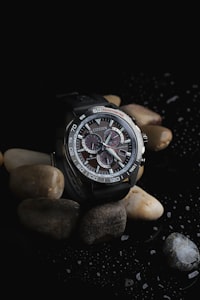
Grand Seiko Spring Drive 8-Day — The Statement
192 hours of power reserve. Eight days of stored energy in a Spring Drive movement. Platinum case. The most technically ambitious consumer Spring Drive available. For those for whom the Snowflake feels insufficiently dramatic. Browse our $20K+ guide for the full range.
The JW Verdict
The Spring Drive is one of the genuinely original achievements in modern watchmaking — a movement that solved a problem everyone else had concluded was unsolvable, using principles no one else had thought to apply. It sits outside the normal categories: more accurate than mechanical, more interesting than quartz, powered by neither a battery nor conventional escapement logic.
Grand Seiko's execution of the Spring Drive is, in this writer's view, among the finest watchmaking being done anywhere in the world right now. The Swiss have tradition, heritage, and marketing. Grand Seiko has the Snowflake dial and a gliding seconds hand. On a good day, that's the better deal.
Yoshikazu Akahane spent 22 years on his impossible idea. The least we can do is spend a few minutes understanding it. It repays the attention rather generously.